
Short answer: yes, you can buy from AliExpress safely in 2026 as long as you pay inside the platform, check seller ratings before you click “buy,” and understand exactly what Buyer Protection does and doesn’t cover. Most horror stories about AliExpress orders going wrong trace back to one of a handful of avoidable mistakes — not to the platform itself.
One more reminder before you place an order: if you want to buy from AliExpress safely, always keep your chat log with the seller inside the platform, since that history is exactly what Buyer Protection reviews if a dispute happens later.
This guide walks through exactly how to buy from AliExpress safely: how the platform actually protects buyers, the rules experienced personal importers follow every time they order, the red flags that predict a bad listing before you pay, and what to do if a package never shows up or arrives broken.
Is AliExpress Safe in 2026?
Buying from AliExpress safely comes down to a short list of habits, covered in detail below: paying only inside checkout, vetting the seller, and knowing exactly how Buyer Protection works before you need it.
AliExpress is a marketplace, not a single retailer — every listing is sold by an independent, usually China-based, seller who is renting shelf space on Alibaba Group’s platform. That structure is exactly what makes Amazon’s third-party marketplace or eBay work too, and it means safety depends far more on which seller you buy from than on the platform’s brand name.
The platform itself backs every eligible order with Buyer Protection, which is the mechanism that actually makes AliExpress usable for strangers shopping cross-border: your payment is held by AliExpress, not released to the seller, until you confirm the order arrived as described or a protection window closes.
That said, “safe” doesn’t mean “risk-free.” Counterfeit goods, misleading photos, and slow shipping are common enough on AliExpress that experienced buyers treat every new seller as unproven until they’ve built a track record of resolved orders and reviews with photos. Treat the rest of this guide as the checklist that separates a smooth AliExpress order from a frustrating one.
How AliExpress Buyer Protection Actually Works
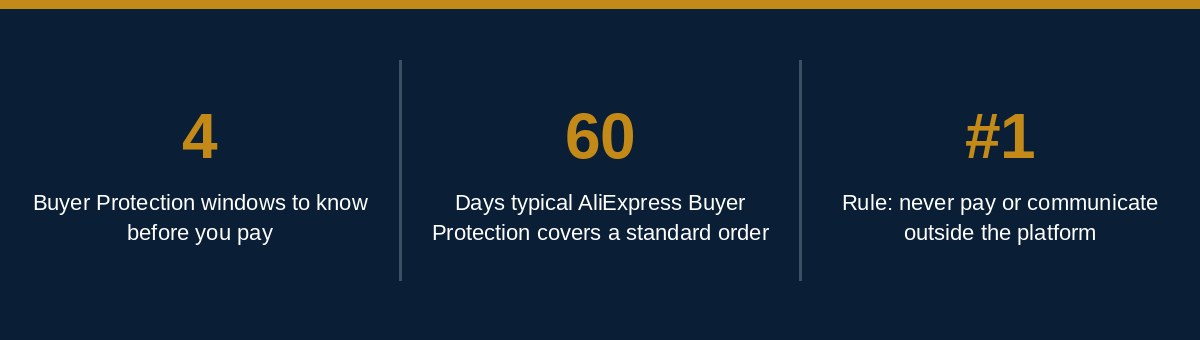
Every order placed and paid for through AliExpress checkout is automatically covered by Buyer Protection at no extra cost — there’s nothing to opt into. The protection period is typically pegged to the seller’s stated shipping time plus a buffer, and for most standard orders that adds up to somewhere around 60 days from payment, though the exact countdown is shown on your order page and can vary by shipping method and seller.
Here’s the mechanic that matters: AliExpress holds your payment in escrow and does not release it to the seller until you click “Confirm Goods Received,” or until the protection window simply expires without a dispute. That second detail is important — if you forget about an order and the window closes with no dispute filed, the money moves to the seller by default, whether or not the item ever arrived.
If something is wrong — item never arrived, arrived damaged, or isn’t as described — you open a dispute from the order page before the countdown ends. AliExpress asks for evidence (photos, tracking screenshots, a description of the problem) and mediates between you and the seller. Outcomes range from a partial refund, a full refund, a replacement, or a return-and-refund depending on the issue and the seller’s response.
The one hard rule that protects this entire system: any payment or negotiation conducted outside AliExpress checkout — a seller asking you to pay via bank transfer, WeChat, or a separate invoice link — is not covered by Buyer Protection at all, no matter how legitimate the seller seems.
Rules to Buy From AliExpress Safely, Every Time
These aren’t exotic tips — they’re the handful of habits that account for most of the difference between a smooth AliExpress experience and a bad one.
- Never pay or communicate outside the platform. If a seller messages you asking to move the conversation to WhatsApp or offers a “discount” for paying via wire transfer, that’s the single biggest red flag on AliExpress — it’s a direct attempt to route your money around Buyer Protection.
- Check the seller’s store rating and years active, not just the product rating. A product can have inflated reviews from a seller’s other, legitimate items. Look at the store’s overall positive-feedback percentage and how long it’s been operating — new stores with few transactions carry more risk.
- Read reviews with photos, and sort by “with pictures” or most recent. Text-only five-star reviews are the easiest thing for a seller to manipulate; real buyer photos are much harder to fake at scale.
- Use a credit card or a payment method with its own dispute process as a backup. AliExpress’s own Buyer Protection is the first line of defense, but a card chargeback is a useful fallback if a dispute doesn’t resolve in your favor.
- Screenshot the listing at the time you buy. Listings get edited after the fact more often than buyers expect — a screenshot of the price, specifications, and photos you actually paid for is your evidence if the dispute process asks “what were you promised?”
- Track the shipment and mark receipt only after you’ve actually inspected the item. Don’t confirm receipt the moment tracking shows “delivered” — open the package first. Once you confirm, the protection window effectively ends for that order.
- Be skeptical of prices that are dramatically below every other listing for the same item. A price 70% below the next-cheapest listing for an identical product is far more often a sign of counterfeit goods, a bait-and-switch, or a listing that will never ship than an incredible deal.
Red Flags That Predict a Bad Order
Spotting these red flags early is a core part of how to buy from AliExpress safely, since avoiding a bad seller is easier than resolving a bad order after the fact.
Before you pay, a few signals reliably correlate with problem orders: a seller store with a low positive-feedback percentage (under roughly 95%) or very few completed orders; product photos that look like generic stock images rather than the seller’s own product shots; listings for branded items (electronics, name-brand clothing, licensed characters) priced far below what the brand charges anywhere else, which is a strong indicator of counterfeit stock; sellers who message you first, unprompted, offering a “better deal” outside checkout; and shipping estimates that seem unrealistically fast for the stated origin and method.
None of these guarantee a bad outcome on their own, but two or more together are a reason to look for a different seller for the same item — and on AliExpress, there almost always is one.
How to Buy From AliExpress Safely When Shopping for Electronics
Electronics deserve a special note because the stakes of a bad order are higher — a $6 phone case that disappoints is annoying, but a $40 charger or power bank that’s poorly made can be a genuine safety issue. For electronics, add two extra checks on top of the general rules above: look specifically for certification marks relevant to your country (such as CE or FCC markings, where applicable) mentioned in the listing or shown in buyer photos, and be extra skeptical of “name-brand” electronics accessories priced far below what an authorized retailer charges, since counterfeit or unsafe electronics are one of the more common categories of AliExpress complaint.
For anything that plugs into a wall or touches a lithium battery, paying a little more for a seller with a long track record and detailed, specific reviews (not just star ratings) is worth it.
What to Do If Something Goes Wrong
Even buyers who consistently buy from AliExpress safely occasionally hit a problem order — here’s exactly how to handle it.
Open a dispute from the order page as soon as you notice a problem — don’t wait, since the protection window is finite and doesn’t pause while you decide what to do. Gather evidence first: photos of the item as received (including packaging and any damage), your original screenshot of the listing, and tracking history if the issue is a late or missing delivery. Be specific and factual in the dispute description rather than emotional — “item received does not match listing photos; attached comparison” resolves faster than a general complaint.
If the seller doesn’t respond within the platform’s set window, or the resolution isn’t acceptable, AliExpress customer service can be escalated to directly from the dispute. As a last resort, if a seller pressured you into paying outside the platform (against the advice above) and Buyer Protection doesn’t apply, a credit card chargeback through your card issuer is usually the only remaining option — another reason to always pay inside AliExpress checkout in the first place.
Which Payment Method Actually Protects You Best
Choosing the right payment method is one more piece of how to buy from AliExpress safely, since it determines your fallback options if a dispute doesn’t go your way. Getting this one habit right is often what separates buyers who consistently buy from AliExpress safely from those who learn the hard way.
AliExpress checkout supports several payment methods, and they’re not all equally safe. A credit card is generally the strongest choice for a first-time or high-value order: you get AliExpress Buyer Protection as your first line of defense, and if that process somehow doesn’t resolve things, your card issuer’s own chargeback rights are a second, independent layer of protection. Debit cards work through the same checkout flow but typically offer weaker dispute rights than a credit card once the money has actually left your account.
PayPal, where offered on a given AliExpress storefront, adds its own separate buyer protection program on top of the platform’s, which is why some experienced buyers specifically look for sellers who accept it for larger purchases.
Whatever method you choose, the one universal rule stands: it has to go through AliExpress checkout to count. A seller who asks you to send payment via a bank wire, a cryptocurrency transfer, or a third-party payment app outside the order flow is not offering you a discount — they’re asking you to give up every protection this article describes.
How Much Can You Actually Save Buying Direct?
The appeal of AliExpress is real: buying directly from a manufacturer or wholesaler-adjacent seller instead of through several layers of retail markup can mean paying a fraction of what the same or a similar item costs at a local store, especially for electronics accessories, home goods, apparel, and craft or hobby supplies. But the honest comparison isn’t “AliExpress price vs. store price” — it’s “AliExpress price plus shipping plus any customs duty vs. store price,” and that second number has gotten more important since the customs rules governing low-value personal imports changed in 2025 (covered in full in our companion guide on personal import duty).
A $15 item that used to land at your door for $15 plus a few dollars of shipping may now carry an additional duty charge depending on its country of origin and category, which can meaningfully change whether an item is still a bargain once it actually clears customs. Building that extra line item into your mental math before you buy — rather than being surprised by it at delivery — is the difference between a good deal and a mildly annoying one.
Run the numbers on a specific example: a pair of wireless earbuds listed at $9 on AliExpress versus $25 at a big-box electronics retailer. That $16 gap looks decisive until shipping (often $3–5 for standard delivery) and, since 2025, a duty or processing charge in the $5–8 range covered in our companion guide are added — narrowing the real gap to roughly $3–8, not $16.
The AliExpress option is usually still cheaper, but a shopper comparing sticker prices alone would overestimate the savings by two to three times. For items already close to retail price-matching territory, that narrower real gap is sometimes not worth a two-to-four-week shipping wait.
Packaging, Quality Control, and What Photos Won’t Tell You
Listing photos on AliExpress are usually accurate for the item itself but rarely tell you much about build quality, materials, or sizing consistency — details that matter enormously for clothing, electronics accessories, and anything with moving parts. Two habits close most of that gap. First, check the size chart on the actual listing rather than assuming standard sizing; many sellers use measurements that don’t match Western retail sizing conventions, and the listing’s own chart (not the product name) is the accurate source.
Second, look specifically for buyer photos and videos in the reviews section, since they show the item under normal lighting and use rather than a studio setup, and they’re the fastest way to catch quality issues before you’re the one discovering them.
For anything fragile, check whether other buyers mention packaging quality in their reviews — poor packaging is a common and avoidable reason for items arriving damaged, and it’s a pattern that shows up in reviews before it shows up in your own order.
AliExpress vs Other Overseas Marketplaces
AliExpress isn’t the only way to buy directly from overseas sellers, and it’s worth knowing where it fits. Temu operates on a similar third-party marketplace model but with more centralized fulfillment and generally faster, more uniform shipping; Alibaba is built for wholesale/bulk orders rather than single-item retail purchases and works differently for buyer protection; and buying through a seller’s own independent website (outside any marketplace) means you lose platform-level buyer protection entirely and are relying solely on that seller’s own return policy and your card issuer.
For a first-time personal importer, a well-reviewed AliExpress or Temu order inside the platform’s checkout is generally the lower-risk starting point compared with an unfamiliar independent storefront.
Common Mistakes First-Time Buyers Make
Most of the mistakes below come down to skipping one of the core habits that let you buy from AliExpress safely in the first place. Reviewing them before your next order is a quick way to buy from AliExpress safely without repeating a beginner’s error.
The most common mistake isn’t picking a bad seller — it’s confirming receipt too early, before actually testing or inspecting the item, which closes off the dispute window unnecessarily. A close second is ignoring the estimated delivery window shown at checkout and panicking (or worse, opening and closing a dispute) before the seller’s stated shipping time has actually elapsed; international shipping from China routinely takes two to four weeks depending on the method chosen.
Buyers also frequently underestimate landed cost by looking only at the AliExpress sticker price and forgetting that customs duties may now apply on top of it — a topic significant enough that we cover it in detail separately, since the rules changed materially in 2025 and affect nearly every cross-border order today.
Finally, first-time buyers sometimes skip reading the specific shipping method’s protection terms, which can differ from the platform’s general policy for unusually cheap or slow shipping options.
Frequently Asked Questions About How to Buy From AliExpress Safely
Is it safe to give AliExpress sellers my address? Yes — your shipping address is only visible to the seller for fulfillment purposes and is handled the same way any e-commerce order handles a shipping address; it’s not a meaningful risk factor compared to the payment and dispute issues covered above.
What happens if my package is stuck in customs? Contact the seller and check your tracking for a customs-hold status; most delays resolve within the shipping window already built into your Buyer Protection countdown, but if it drags past that window, you can still open a dispute citing non-delivery.
Can I return an item I just don’t like, even if it’s not defective? It depends entirely on the individual seller’s return policy, which is shown on the product page — AliExpress Buyer Protection guarantees a resolution path for items that are defective, damaged, or not as described, but “changed my mind” returns are seller-discretionary.
Do I need a VPN or special account to buy from AliExpress? No — AliExpress is a standard international e-commerce site accessible directly from most countries with a normal account and standard payment methods like major credit cards or PayPal where supported.
Why is my item taking so long to ship? Standard AliExpress shipping from China commonly takes two to four weeks depending on the carrier and method selected at checkout; expedited options exist for a higher shipping fee if you check the listing before ordering, and the exact estimate for your order is always shown before you pay.
Will I have to pay customs duty on top of the AliExpress price? Very likely yes for most orders today — the rules changed substantially in 2025 and duty now applies to nearly all personal shipments regardless of value; see our dedicated guide on personal import customs duty for the current details.
Bottom Line: How to Buy From AliExpress Safely
To recap how to buy from AliExpress safely: pay only inside checkout, vet the seller before the product, read photo reviews, and don’t confirm receipt until you’ve inspected the item. Buyers who buy from AliExpress safely treat these as non-negotiable habits, not optional tips.
AliExpress earns its reputation as one of the more approachable ways to buy directly from overseas manufacturers and sellers — but that reputation depends on buyers actually using the protections built into the platform rather than getting talked around them. Pay inside checkout, vet the seller before you vet the product, keep your evidence, and don’t confirm receipt until you’ve actually opened the box. Do that consistently and AliExpress becomes a genuinely reliable sourcing channel rather than a gamble.
Related Reading
AliExpress Buyer Protection official help center • U.S. Customs and Border Protection — basic importing guidance • How Much Customs Duty Will You Pay on a Personal Package From China? • About TradeMentorHQ
This article is for general informational purposes and reflects platform policies and shipping rules as of publication; AliExpress policies and customs regulations can change, so always confirm current terms directly with the platform and your local customs authority before relying on them for a specific purchase.

About the Author: TradeMentorHQ Team
The TradeMentorHQ team researches and writes practical, plain-language guides on Incoterms, customs clearance, trade finance, and shipping logistics for small business owners, first-time importers/exporters, and side-hustle sellers. Our articles are grounded in publicly available regulations and guidance from bodies like U.S. Customs and Border Protection (CBP), the International Chamber of Commerce (Incoterms 2020), and established industry practice, and we link to primary sources wherever a number or rule could change. We are not customs brokers, freight forwarders, or licensed trade attorneys, and nothing here is a substitute for advice from one on your specific shipment.