
Short answer: if you have a personal import seized by customs, U.S. Customs and Border Protection will send you a written notice within about 60 days, and you generally have three options — file a claim and post a bond to fight it in court, petition CBP directly for remission (getting the item back or reducing the penalty), or abandon the item and walk away. Ignoring the notice is the one option that guarantees you lose the package for good.
When your personal import gets seized by customs, that is different from an ordinary customs hold. A hold just means CBP is still reviewing your package — it can still clear. A seizure means CBP has already decided the item violated a law or regulation and has taken legal ownership of it. That distinction changes everything about what you should do next.
This guide covers exactly what happens when a personal import gets seized by customs and why it happens, what the official seizure notice says, the three paths you can take in response, the deadlines that matter, and what real-world consequences — from fines to a revoked Global Entry membership — can follow a seizure.
Common Reasons a Personal Import Seized by Customs Happens
A personal import seized by customs usually falls into a handful of categories: counterfeit or trademark-infringing goods (replica handbags, fake electronics, unauthorized branded merchandise), prescription medications without proper documentation, controlled substances, undeclared or falsely declared items, firearms and ammunition or their parts, and restricted agricultural products like certain seeds, meats, or plants. A seizure isn’t always about something obviously illegal — a generic supplement with an unapproved ingredient, or a phone case that infringes a trademark, can trigger one just as easily as something intentionally smuggled.
The Seizure Notice: What CBP Actually Sends You
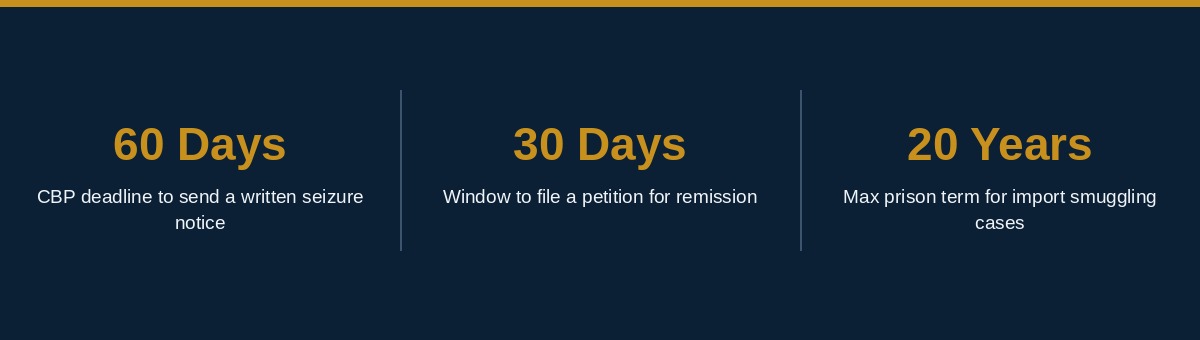
When a personal import seized by customs triggers a formal case, CBP is required to send a written Notice of Seizure to the importer of record, generally within 60 days of the seizure. That notice explains what was seized, the legal basis for the seizure, and — critically — your available options and the deadlines for each one. If you’ve moved or the notice gets lost, that 60-day window doesn’t stop the clock, so it’s worth checking your CBP correspondence status directly if you suspect a package was seized and you haven’t heard anything.
Your Three Options After a Seizure Notice
Once you have the notice in hand, you generally have three paths. First, you can file a claim and post a bond, which moves the case into federal court for a judge to decide — this is typically only worth it for higher-value shipments given the legal cost involved. Second, and far more common for personal imports, you can petition CBP directly for remission or mitigation, asking the agency to return the item or reduce any penalty, often by explaining the circumstances (for example, that you didn’t know an item was restricted).
Third, you can simply abandon the item, which requires no further action but means you permanently lose it. Petitions for remission for a personal import seized by customs are typically due within 30 days of the seizure notice, and claims requesting court referral within 20 days — missing both deadlines effectively defaults you into abandonment.
How to File a Petition for Remission
If you have a personal import seized by customs, a petition for remission is a written letter to the port office listed on your seizure notice, explaining why the seizure should be canceled or the penalty reduced. Include your case/seizure number, a clear explanation of the circumstances, and any documentation that supports your position — proof of purchase, correspondence with the seller, or evidence you didn’t know the item was restricted.
CBP reviews petitions and can grant full remission, partial remission (returning the item for a reduced fine), or deny the petition outright. There’s no guarantee of a specific outcome, but a clear, honest, well-documented petition has a real chance, especially for first-time, lower-value cases. You can read CBP’s own guidance on the process on the official CBP website before you file.
What Happens If You Do Nothing
If you don’t respond to a personal import seized by customs case by the relevant deadline, CBP treats the seizure as uncontested and can proceed to forfeit the item permanently — meaning it’s destroyed, sold at auction (for non-restricted goods), or otherwise disposed of. Once forfeiture is finalized, there’s generally no getting the item back, even if you later decide you wanted to fight the seizure. That’s why the biggest mistake people make isn’t picking the “wrong” option — it’s letting the deadline pass without picking any option at all.
Real Consequences Beyond Losing the Item
For a typical personal import seized by customs — a counterfeit item or an undeclared low-value package — the consequence is simply losing the item and possibly a civil fine.
But more serious cases carry heavier consequences: importing controlled substances or falsifying documentation can lead to criminal prosecution, with penalties for smuggling reaching up to 20 years imprisonment in serious cases.
Even short of criminal charges, a pattern of seizures on your customs record can result in CBP revoking Global Entry or TSA PreCheck membership, and can trigger closer scrutiny of future shipments and travel.
How to Avoid a Seizure in the First Place
The best way to avoid a personal import seized by customs situation is simple: declare the true value and contents of every package, and confirm an item isn’t counterfeit or trademark-restricted before buying, especially with brand-name goods sold suspiciously cheap.
Check whether prescription medications require special documentation before importing them, and avoid ordering firearms parts, certain agricultural products, or anything you’re not confident is legal to import without first checking CBP’s restricted and prohibited items list. Following these steps is the best way to make sure you never have a personal import seized by customs in the first place. When in doubt, a seller who tells you to mark a package as “gift” to avoid duties is a red flag, not a helpful tip — that kind of misdeclaration is itself a common cause of seizure.
Frequently Asked Questions
How long does CBP have to notify me after a personal import seized by customs?
CBP is generally required to send a written Notice of Seizure within about 60 days of the seizure. If you suspect a package was seized and haven’t received anything close to that window, it’s worth contacting CBP directly to check your case status.
Can I get my seized item back?
Sometimes. A petition for remission can result in the item being returned, often with a reduced penalty, particularly for first-time or lower-value cases where you can show you didn’t knowingly violate the rules. There’s no guarantee, but doing nothing guarantees you won’t get it back.
Do I need a lawyer to respond to a seizure notice?
Not necessarily for a straightforward petition for remission on a lower-value personal item — many people file these themselves. For higher-value seizures, criminal exposure, or anything involving a formal court claim, consulting a customs attorney is worth the cost.
Will a seizure show up on my record permanently?
CBP keeps records of prior seizures tied to an importer, and repeated seizures can lead to increased scrutiny of future shipments and potential loss of trusted traveler programs like Global Entry, even when no criminal charges are filed.
Bottom Line on a Personal Import Seized by Customs
A personal import seized by customs feels alarming, but it’s a process with defined rules, not a dead end. Read the notice carefully, note your deadlines, and pick one of the three paths — claim, petition, or abandon — before time runs out. For most personal import cases, a clear, honest petition for remission is the practical first move, and understanding what happens if your personal import gets seized by customs before it happens is the best way to make sure you never have to use any of these options at all.
If your shipment is seized, CBP typically mails a Notice of Seizure (often referencing CBP Form 4647) to the address on the import documents, and from that notice date you generally have 30 days to file a petition for relief (requesting the goods back, sometimes with a penalty) or to formally contest the seizure — missing that window can result in the goods being administratively forfeited.
Storage and processing fees may apply even if you get the goods back, and if no petition is filed, CBP can move to forfeit and dispose of the goods after the response period closes, sometimes within a matter of months rather than years. Given how document-heavy and deadline-sensitive this process is, it’s worth reading the notice closely for its exact response deadline rather than assuming a standard 30-day window applies in every case.
Related Reading
Customs Duty on a Personal Package From China: The Ultimate 2026 Guide
How to Buy From AliExpress Safely: 7 Rules for Personal Imports

About the Author: TradeMentorHQ Team
The TradeMentorHQ team researches and writes practical, plain-language guides on Incoterms, customs clearance, trade finance, and shipping logistics for small business owners, first-time importers/exporters, and side-hustle sellers. Our articles are grounded in publicly available regulations and guidance from bodies like U.S. Customs and Border Protection (CBP), the International Chamber of Commerce (Incoterms 2020), and established industry practice, and we link to primary sources wherever a number or rule could change. We are not customs brokers, freight forwarders, or licensed trade attorneys, and nothing here is a substitute for advice from one on your specific shipment.