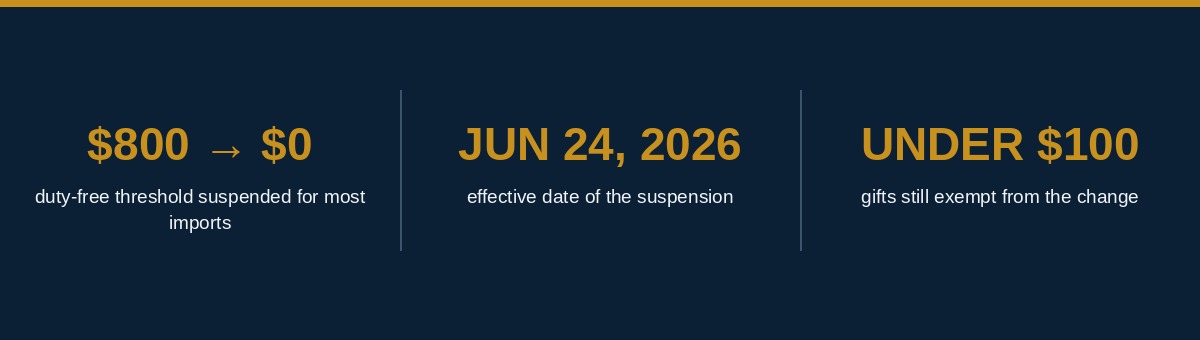
Short answer: de minimis suspended is the short version — the $800 exemption that let personal imports under $800 enter the U.S. duty-free is gone for nearly every shipment, not merely reduced — as of an interim final rule effective June 24, 2026, low-value shipments from every country, arriving by every mode except the international postal network, now go through formal or informal customs entry and owe duty like any other import.
For years, buying from overseas marketplaces felt duty-free by default as long as an order stayed under $800 — that assumption no longer holds. The change affects anyone who regularly orders from international sellers, not just high-volume resellers, and the practical impact shows up as a duty and processing-fee line on packages that used to clear with no extra charge at all.
This guide covers exactly what changed, which imports are still exempt, what it actually costs now, and how to adjust if you regularly buy from overseas sellers.
What the De Minimis Exemption Used to Allow
Under the rule that applied until 2026, personal imports valued at $800 or less could enter the United States without paying duty and without going through a formal customs entry — a simplified process built for low-value packages that made overseas shopping from sites like AliExpress, Temu, and Shein feel effectively duty-free for most individual orders.
De Minimis Suspended: What Actually Changed, and When
An interim final rule suspending the $800 exemption took effect June 24, 2026, implementing an executive order signed in 2025. The suspension applies to merchandise from all countries of origin, arriving through all shipping modes except the international postal network, which is being addressed under a separate, concurrent rule.
Previously exempt low-value shipments must now go through formal or informal entry procedures — commonly Entry Type 11 for informal entries — meaning duty, applicable trade-action tariffs, and processing fees now apply based on the product’s classification, the same way they would for a larger commercial import. The exemption is also scheduled for full statutory termination on July 1, 2027, so this suspension isn’t a temporary blip — it’s the leading edge of a permanent change.
What’s Still Exempt
Two narrower exemptions survive the suspension: bona fide gifts valued under $100 sent from one individual to another, and personal articles under $200 that a traveler is carrying with them when entering the country. Neither of those covers a typical online order shipped to your address, so don’t assume a low-value marketplace purchase still qualifies just because it resembles a “gift” in the listing description.
What This Actually Costs You Now
The exact duty rate depends on the product’s HS classification and country of origin, so there’s no single number that applies to every order — the interim rule itself doesn’t specify a flat rate, because duty now follows the same classification-based rules as any formal import. What’s consistent is that a package that used to arrive with no charge beyond the listed price will now typically carry an added duty amount plus a processing or entry fee, and some carriers and marketplaces have begun collecting this at checkout rather than leaving it as a surprise charge on delivery.
Expect line-item duty charges to become the norm rather than the exception on international orders going forward.
How to Adjust If You Regularly Buy From Overseas Sellers
Check whether the marketplace or carrier you’re using now collects duty at checkout — several major platforms updated their checkout flow to show an estimated duty charge up front rather than surprising buyers at delivery, and knowing this before you order beats finding out when a package gets held. Factor duty into your actual per-item cost when comparing an overseas listing against a domestic one; a listing that looked cheaper under the old exemption may no longer be the better deal once duty is added.
If you’re importing for resale rather than personal use, the landed-cost math you should already be running gets a new line item — our landed cost calculator guide walks through how to fold duty into your true cost per unit.
De Minimis Suspended: Common Mistakes to Avoid Right Now
The biggest mistake is assuming an order under $800 is still automatically duty-free, since that assumption is exactly what changed. A second mistake is not checking a marketplace’s updated checkout process before ordering, then being surprised by a duty bill or held package on delivery. A third is treating this as a temporary policy blip rather than planning around it — the scheduled 2027 statutory termination means the direction of travel is toward permanently ending the exemption, not restoring it.
De Minimis Suspended: Quick Reference for Frequent Buyers
If you order internationally on a regular basis, treat de minimis suspended as the new default rather than a temporary exception: budget for duty on every order, check whether your marketplace shows an estimated charge before you check out, and keep a rough sense of your product’s HS classification so you can estimate the rate in advance. None of this requires special software or a customs broker for typical personal-use orders — it just means dropping the old habit of assuming a low order value means no charges, since that assumption is exactly what changed.
Bottom Line
De minimis suspended is the reality now: the $800 exemption that made small overseas orders feel duty-free is gone for nearly all shipments as of June 24, 2026, with only narrow gift and traveler exemptions left standing.
If you regularly order from international sellers — for personal use or resale — the safest move is to check for duty at checkout going forward and stop assuming a low order value means no charges. Because this area of customs policy has moved more than once in the past year, with de minimis suspended and the rules still evolving, always verify the current rule directly with U.S. Customs and Border Protection before making a purchasing decision that depends on it.
A practical wrinkle that trips people up: even before the broader suspension, CBP had already been flagging split shipments — several packages from the same seller to the same address within a short window that collectively add up to well over $800 — as a pattern suggesting deliberate exemption abuse, not just ordinary shopping volume.
Staying under $800 on each individual box while ordering from the same overseas seller several times a week was never as safe a workaround as it looked. Because these thresholds and country-specific carve-outs have been revised more than once in the past two years, treat any specific dollar figure here (including this one) as a starting point, and check the current guidance on cbp.gov before you place an order that depends on it.
Related Reading
Customs Duty on a Personal Package From China: What You’ll Actually Pay
Is Temu Safe in 2026? The Complete Guide to Avoid 5 Risks
How to Buy From AliExpress Safely: 7 Rules for Personal Imports
This guide reflects U.S. customs policy as of September 2026. De minimis rules have changed more than once in the past year and remain subject to further rulemaking — always confirm the current status directly with CBP before making import decisions that depend on it.

About the Author: TradeMentorHQ Team
The TradeMentorHQ team researches and writes practical, plain-language guides on Incoterms, customs clearance, trade finance, and shipping logistics for small business owners, first-time importers/exporters, and side-hustle sellers. Our articles are grounded in publicly available regulations and guidance from bodies like U.S. Customs and Border Protection (CBP), the International Chamber of Commerce (Incoterms 2020), and established industry practice, and we link to primary sources wherever a number or rule could change. We are not customs brokers, freight forwarders, or licensed trade attorneys, and nothing here is a substitute for advice from one on your specific shipment.