
Short answer: a real Etsy side hustle with imported products has to work within Etsy’s actual rules — handmade items, genuine vintage (20+ years old), and craft supplies are allowed, but plain resale of finished, mass-manufactured imported goods is not, except through Etsy’s disclosed production-partner path in a handful of eligible categories.
It’s an easy mistake to make: Etsy looks, at a glance, like eBay or Amazon FBA with a craftier storefront — import inventory, list it, sell it. Etsy’s Seller Policy is built around the opposite idea, and shops that treat it like a generic resale marketplace risk suspension once Etsy’s review catches the mismatch between the listing and the actual product.
This guide covers what Etsy actually permits, the three legitimate ways to build an Etsy side hustle around imported goods without breaking policy, realistic seller fees to price into your first listings, and the mistakes that get new Etsy shops flagged fastest.
What Etsy Actually Allows You to Sell (And What It Doesn’t)
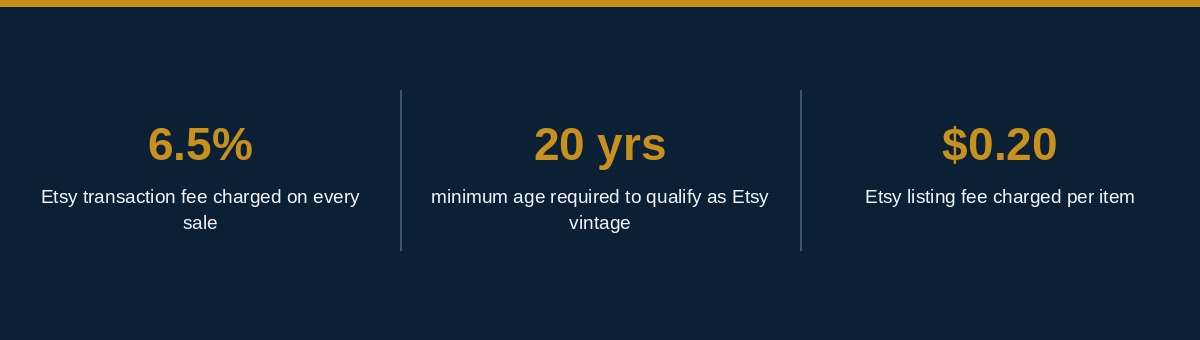
Etsy’s Seller Policy restricts listings to three categories: items you made or designed yourself, genuine vintage items (Etsy’s definition requires the item to be at least 20 years old), and craft supplies — materials and tools intended for someone else to use in making something. Plain resale of finished goods you didn’t make, design, or source as genuine vintage falls outside all three.
Etsy’s own policy states it plainly: dropshipping and reselling are not allowed on Etsy, except in the specific cases the platform outlines, such as qualifying craft supplies. There is one narrower exception worth knowing — a small set of categories (including jewelry, ceramics, bath and beauty, art, and a few others) allow a “production partner”: a manufacturer you’ve contracted with to help produce an item you designed, as long as you disclose that partner in the listing.
Because Etsy’s exact eligible-category list for production partners changes periodically, don’t assume your product qualifies — check Etsy’s current Seller Policy directly before sourcing inventory around that path.
How to Start an Etsy Side Hustle With Imported Products the Legal Way
There are three realistic ways to build an Etsy side hustle around imported goods. The first is importing craft supplies rather than finished goods — ribbon, fabric, beads, jewelry findings, blank ceramics, packaging materials — and either reselling them as-is under the craft supplies category or using them yourself to make handmade items you then sell. This is the most straightforward path because Etsy’s rules were written to explicitly allow it.
The second path is sourcing genuine vintage inventory abroad — overseas flea markets, estate sales, and vintage wholesalers can be excellent sourcing grounds, as long as every item you list actually meets Etsy’s 20-year age threshold. Listing recent goods as “vintage-style” is not the same thing, and Etsy’s review process specifically looks for that mismatch.
The third path is designing your own product and manufacturing it overseas through a disclosed production partner, in one of the categories where that’s permitted. You’re not reselling someone else’s finished product here — you designed it, you own the listing, and you’re transparent in the listing about where and how it’s made.
Step-by-Step: Setting Up Your Etsy Side Hustle Shop
Open an Etsy shop, choose a shop name, and set up Etsy Payments so you can actually receive money from sales. For your first listing, fill in the “who made it,” “what is it,” and “when was it made” fields honestly — these aren’t throwaway form fields, they’re the exact signals Etsy’s review process checks against your product photos.
If you’re using a production partner, disclose it in the listing’s production-partner section rather than leaving it blank; Etsy explicitly requires this for eligible categories, and an undisclosed partner is treated as a policy violation even if the product itself would otherwise qualify. Use your own original photography throughout — not a supplier’s stock images — since reused supplier photos are one of the fastest ways a new shop gets flagged.
Etsy Seller Fees You Need to Budget Into Your Pricing
Etsy charges a $0.20 listing fee per item (and again each time a multi-quantity listing sells), a 6.5% transaction fee on the total sale price including shipping, and a payment processing fee of roughly 3% plus $0.25 per transaction for U.S. sellers (rates vary by country). Offsite Ads is a further 15% fee on qualifying sales for shops under $10,000 in trailing 12-month revenue, and becomes mandatory at 12% above that threshold, though the under-$10,000 version can be opted out of.
On a simple $30 sale with $5 shipping, that’s roughly $0.20 (listing) + $2.28 (6.5% transaction on $35) + $1.30 (processing) — about $3.78, or roughly 11% of the sale, before your product cost, import duty, or any optional Etsy Ads spend. Build that percentage into your pricing from the start rather than discovering it after your first payout.
Import Duty and Customs When Sourcing Inventory From Overseas
Whether you’re importing craft supplies, vintage finds, or manufactured units from a production partner, the shipment still has to clear U.S. customs, and the same landed-cost math that applies to any personal or small-batch import applies here — product cost, international shipping, duty, and any customs entry fees all belong in your true per-unit cost before you set an Etsy price.
Because China-origin duty rules in particular have shifted more than once since 2025, don’t price a new batch of imported inventory off an old landed-cost number — our landed cost calculator guide walks through the current formula and a worked example in more depth than fits here.
Common Mistakes That Get New Etsy Shops Suspended
The single most common mistake is listing finished, mass-manufactured imported goods as handmade, or leaving a real production partner undisclosed — Etsy’s review process is specifically built to catch this pattern, and it’s the fastest route to a suspended shop. The second is importing items that copy a recognizable brand’s design or logo; beyond an Etsy policy violation, that’s also a trademark and counterfeit-goods risk with legal exposure well beyond the platform itself.
Reusing a supplier’s product photos instead of your own original images, and copy-pasting a supplier’s generic product description into your listing word-for-word, round out the most common new-seller mistakes — both read to Etsy’s systems as signals of a non-compliant resale listing even before a human reviewer looks at it.
Is an Etsy Side Hustle With Imported Products Worth It in 2026?
An Etsy side hustle with imported products can be worth it, if you build it around one of the three compliant paths above rather than treating Etsy as a generic resale channel. Margins are thinner than straightforward arbitrage-style reselling once Etsy’s roughly 11% combined fee load, shipping, and import duty are all counted, and the model is closer to running a small craft or design business than flipping inventory for a quick markup.
Compared with resale-friendly platforms that don’t restrict what you can list — covered in our eBay vs Poshmark vs Mercari comparison — Etsy asks more of a seller upfront. What it offers in return is a buyer base specifically looking for handmade, vintage, and craft-oriented goods, which is a real advantage if your imported-product side hustle actually fits one of those categories honestly.
Whichever path you choose, treat this Etsy side hustle like the small business it actually is: price in the real fees, keep your sourcing honest about what it is, and revisit Etsy’s Seller Policy periodically since the rules around imported products can shift.
A cost that catches new Etsy sellers off guard: the widely-quoted 6.5% transaction fee is only part of the bill. Add the $0.20 listing fee, roughly 3%+$0.25 payment processing, and Offsite Ads (which becomes mandatory at a 12–15% rate once your shop crosses $10,000 in trailing 12-month sales, versus an opt-in 15% below that), and sellers commonly report Etsy’s effective cut landing closer to 15–20% of the sale price once everything is totaled — not the 6.5% most people budget for.
For a shop reselling imported craft supplies at a 40% markup, that gap between the advertised fee and the real one is often the difference between a hobby that breaks even and one quietly losing money on every sale.
Related Reading
eBay vs Poshmark vs Mercari: The Best Marketplaces for Reselling in 2026
Retail Arbitrage 101: The Proven Way to Flip Thrift Store Finds for Profit
Dropshipping vs. Reselling: Which Side Hustle Fits Your Budget in 2026?
This guide is general information, not legal advice. Etsy’s Seller Policy and production-partner eligibility rules change periodically — always confirm the current requirements directly on Etsy before sourcing or listing imported inventory.

About the Author: TradeMentorHQ Team
The TradeMentorHQ team researches and writes practical, plain-language guides on Incoterms, customs clearance, trade finance, and shipping logistics for small business owners, first-time importers/exporters, and side-hustle sellers. Our articles are grounded in publicly available regulations and guidance from bodies like U.S. Customs and Border Protection (CBP), the International Chamber of Commerce (Incoterms 2020), and established industry practice, and we link to primary sources wherever a number or rule could change. We are not customs brokers, freight forwarders, or licensed trade attorneys, and nothing here is a substitute for advice from one on your specific shipment.