Short answer: sourcing sneakers and collectibles well matters more than selling them well — thrift stores, retail clearance racks, liquidation pallets, and local marketplace listings routinely produce inventory that costs 60–90% less than resale value, but only if you know what to look for and where the resale fees will eat into your margin.
StockX and GOAT both take roughly 9–13% of your sale price once processing fees are included, so a plan for sourcing sneakers and collectibles that ignores those numbers will disappoint you on payout day.
This guide to sourcing sneakers and collectibles covers the beginner-friendly channels that actually work, what authentication and fees look like once you’re ready to sell, and the mistakes that cost new resellers money in their first few months.
Where to Actually Find Sneakers and Collectibles
Thrift stores and Goodwill outlet (“bins”) locations are the classic starting point: bins locations sell by the pound rather than by item, which means a pair of sneakers that would resell for $150 can cost a few dollars. The tradeoff is time — you’re digging through unsorted inventory, and hit rates are inconsistent from store to store and week to week.
Retail clearance and outlet stores are more predictable. End-of-season markdowns at outlet malls, and clearance sections at big-box retailers, regularly include deadstock sneakers and collectibles at 50–70% off, especially right after a holiday or seasonal changeover.
Liquidation Pallets and Wholesale Lots
Liquidation marketplaces sell manifested and unmanifested pallets of returned or overstock merchandise, often sourced directly from major retailers. Manifested pallets (where the contents are itemized in advance) cost more per pallet but carry far less risk than unmanifested lots, where you’re bidding blind on a truckload that could be excellent or could be mostly damaged goods. For a beginner just starting to source sneakers and collectibles, a small manifested lot from a reputable liquidator is safer than jumping straight into a full pallet auction. The Better Business Bureau keeps complaint records on liquidation sellers, so it’s worth a quick check on BBB.org before wiring money to an unfamiliar liquidator.
Facebook Marketplace, Garage Sales, and Local Sourcing
Local sourcing has zero shipping cost and lets you inspect items in person before buying, which matters a lot for collectibles where condition drives most of the value. Searching Facebook Marketplace and local buy-sell-trade groups for underpriced listings (sellers who don’t know what they have) is a well-known strategy, and estate sales in particular are a strong source for vintage collectibles that a general seller may not have priced correctly.
What Resale Fees Actually Look Like
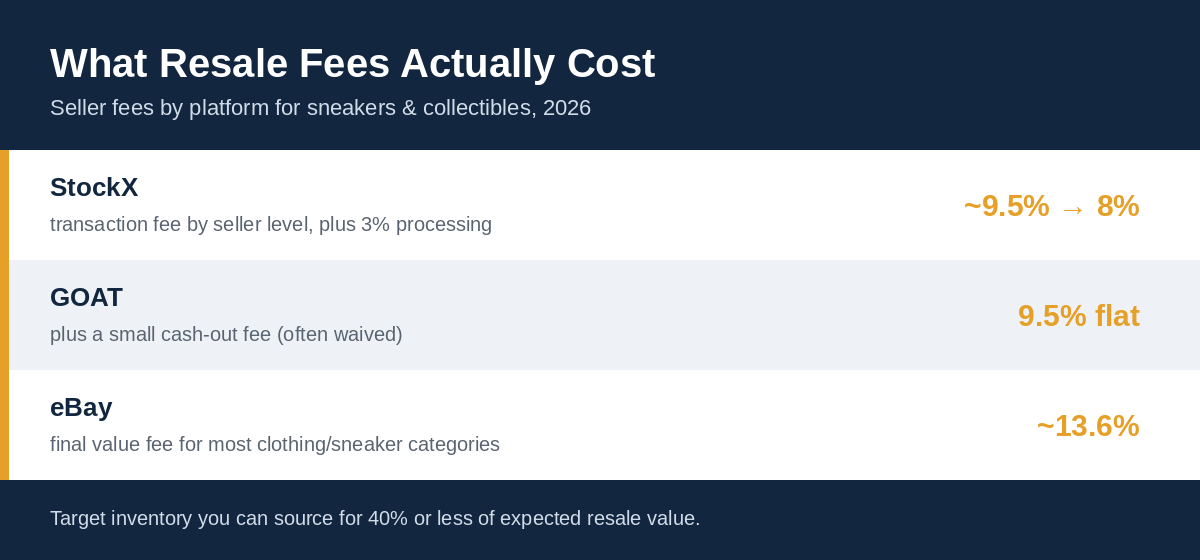
Once you’ve finished sourcing sneakers and collectibles, where you sell them determines how much of the sale price you actually keep. StockX uses a tiered seller-level system: new sellers pay around 9.5% of the sale price, and that rate steps down toward roughly 8% once you’ve completed 50 or more sales, plus a flat 3% payment processing fee on every transaction. GOAT charges a flatter 9.5% commission regardless of volume, plus a small cash-out fee that’s typically waived for higher-tier sellers.
eBay’s final value fee for most clothing and sneaker categories runs around 13.6% plus a small per-order fee, which tends to make it less competitive than the dedicated sneaker platforms unless you’re selling something StockX or GOAT won’t list.
Because these fees range from roughly 9% to 14% of your sale price before shipping costs, a sourcing strategy that doesn’t leave enough margin above those numbers isn’t sustainable — a good rule of thumb for beginners is to target items you can source for 40% or less of expected resale value.
Avoiding the Most Common Beginner Mistakes
Overpaying at the sourcing stage is the single biggest reason new resellers don’t turn a profit — check sold listings (not just active asking prices) on StockX, GOAT, or eBay before buying anything, since active listings are frequently priced far above what items actually sell for. Authentication rejection is the other major risk: buying from unverified sellers or unofficial retailers increases the odds that a “deadstock” pair turns out to be a replica, and a rejected item on StockX or GOAT means you lose the item, the shipping cost, and the time, not just the sale.
Bottom Line
Good sourcing, not aggressive selling, is what separates profitable resellers from people who break even. Thrift bins, outlet clearance, manifested liquidation pallets, and local marketplace listings are all beginner-accessible ways of sourcing sneakers and collectibles, but every one of them needs to be evaluated against the 9–14% resale fees you’ll pay on the back end.
Start small, verify sold prices before you buy, and treat authentication risk as a real cost of doing business.
Related Reading
- eBay vs Poshmark vs Mercari: The Best Marketplaces for Reselling in 2026
- Amazon FBA for Beginners: Is Reselling Still Worth It in 2026?
- Dropshipping vs. Reselling: Which Side Hustle Fits Your Budget in 2026?

About the Author: TradeMentorHQ Team
The TradeMentorHQ team researches and writes practical, plain-language guides on Incoterms, customs clearance, trade finance, and shipping logistics for small business owners, first-time importers/exporters, and side-hustle sellers. Our articles are grounded in publicly available regulations and guidance from bodies like U.S. Customs and Border Protection (CBP), the International Chamber of Commerce (Incoterms 2020), and established industry practice, and we link to primary sources wherever a number or rule could change. We are not customs brokers, freight forwarders, or licensed trade attorneys, and nothing here is a substitute for advice from one on your specific shipment.