When a shipment sits at the port for an extra week, it’s tempting to blame customs as an unpredictable black box. In reality, the vast majority of clearance delays trace back to something the importer or their broker could have fixed before the container ever left the origin port. Most customs clearance delays are self-inflicted — vague product descriptions, incomplete paperwork, and misclassified HS codes cause far more hold-ups than random enforcement ever does, and nearly all of them are preventable with the right documentation upfront.
The Most Common Cause: Documentation and Description Errors
A product description like “machine parts” or “electronic components” tells a customs officer nothing about what’s actually in the box, and vague descriptions are one of the single biggest triggers for a hold — because the officer can’t verify the tariff classification or confirm nothing prohibited or restricted is inside. The fix is unglamorous but effective: describe the item by what it actually is, specifying material, function, and model where relevant, instead of a generic category name.
Missing supporting paperwork — a Certificate of Origin, a Wood Packing Material certificate, or a required permit from a partnering government agency like the FDA or USDA — causes the same kind of hold, and so does something as small as a typo in the consignee’s name or a mismatched Tax ID between the invoice and the entry filing.
The Second Most Common Cause: Misclassification and Valuation
Getting the Harmonized System (HS) code wrong doesn’t just risk a future audit — it’s an immediate, common cause of clearance delay, because customs software flags shipments where the declared classification doesn’t match the description or the declared value looks inconsistent with similar past shipments. As covered in our guide to classifying your product with the correct HS code, getting this step right the first time is one of the highest-leverage things an importer can do — it affects duty calculation, which government agencies get involved, and whether the shipment gets flagged for review at all.
What Actually Happens When Customs Holds Your Shipment
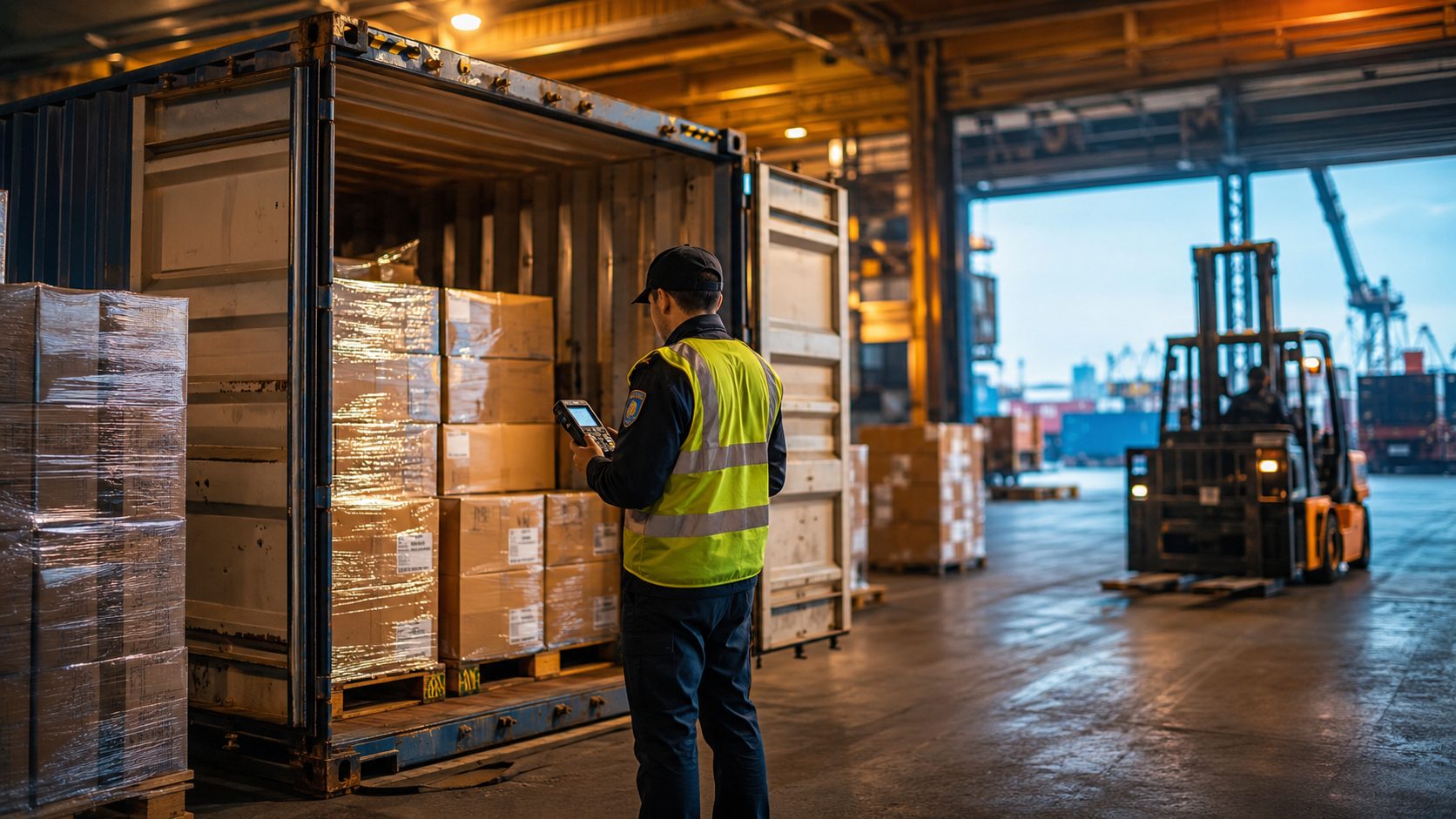
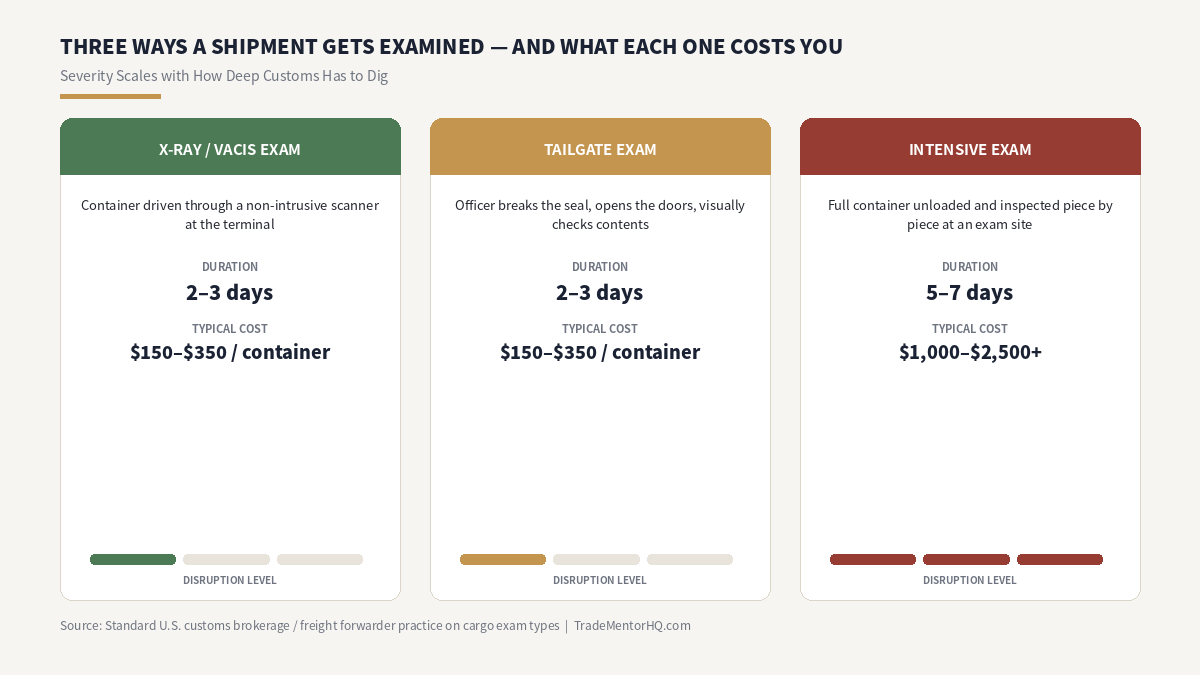
If a shipment does get flagged, it typically lands in one of a few exam types, each with very different time and cost implications. An X-ray (VACIS) exam drives the container through a non-intrusive scanner at the terminal — usually a 2-3 day delay for an ocean shipment, costing roughly $150-$350 per container. A tailgate exam is similarly quick (2-3 days): an officer simply breaks the seal, opens the doors, and visually checks the contents without fully unloading.
An intensive exam is the one that actually hurts — the entire container gets moved to a Customs Exam Site, unloaded, and inspected piece by piece, typically taking 5-7 days for ocean freight and running anywhere from $1,000 to $2,500 or more once drayage and handling fees are included.
A Concrete Illustration
An importer declares a shipment simply as “machine parts” with an HS code that doesn’t quite match what’s actually inside the boxes. Customs flags the mismatch, issues a CF-28 request for more information, and the shipment sits at the terminal while the importer’s broker scrambles to provide a proper description and documentation — five to seven business days lost, plus demurrage charges accruing the entire time.
Compare that to a shipment declared as “CNC-machined aluminum bracket assemblies, part number XJ-4471, for industrial conveyor systems” with the correct HS code attached from the start: nothing about that description or classification looks inconsistent, so there’s nothing for the system to flag, and the container clears in the normal timeline.
How to Actually Prevent Delays
As covered in our guide to the documents every exporter needs, missing paperwork is one of the most common and most avoidable causes of a hold. Write specific, verifiable product descriptions instead of generic category names. Get the HS code right before filing, not after a CF-28 request forces a correction. Double-check that consignee names, addresses, and Tax IDs match exactly across every document. Screen counterparties against denied and restricted party lists, since a match there triggers a hold regardless of how clean the rest of the paperwork is.
And where possible, prepay duties or work with a broker who can pay and bill you afterward, since unpaid duties and fees are themselves a common reason a cleared shipment still doesn’t get released from the warehouse.
The Bottom Line
Customs delays feel random when you’re on the receiving end of one, but the underlying causes are almost always specific and fixable: vague descriptions, incomplete documentation, and classification errors account for the overwhelming majority of holds. Get those three things right before the shipment leaves origin, and the exam types that actually cost real time and money — especially intensive exams — become far less likely to happen to you.
Source: U.S. Customs and Border Protection (CBP) practice on entry documentation and cargo exams; industry guidance from customs brokers and freight forwarders on common clearance-delay causes.
The most common causes of customs clearance delays
Most customs clearance delays trace back to a small handful of recurring causes: incomplete or inconsistent documentation, incorrect tariff classification, missing permits for regulated goods, and random or targeted physical exams. Understanding which of these causes is most likely for your specific shipment helps focus prevention effort where it actually matters.
Documentation errors are the single biggest driver of customs clearance delays in practice — a commercial invoice that doesn’t match the packing list, a missing certificate of origin, or a value discrepancy between documents can all trigger a hold while customs seeks clarification, even when the underlying shipment is entirely legitimate.
How customs exams contribute to clearance delays
Physical and X-ray exams are a major source of customs clearance delays, and they range from quick X-ray scans adding a day or two, to full tailgate exams requiring container unloading, to intensive exams that can add a week or more. Exam selection is partly random and partly risk-based, tied to factors like shipper history, product category, and country of origin.
While shippers can’t eliminate exam risk entirely, maintaining a clean compliance history and accurate documentation reduces the likelihood of being flagged for the more time-consuming exam types, since risk-based targeting systems weight past compliance heavily when selecting shipments for customs clearance delays through physical inspection.
How incorrect tariff classification causes delays
Misclassifying goods under the wrong HS code is a frequent and preventable cause of customs clearance delays, since an incorrect classification can trigger a request for additional documentation, a duty recalculation, or a formal review before the shipment is released. Working with a licensed customs broker to verify classification before filing significantly reduces this specific risk.
Repeated classification errors from the same importer can also increase future scrutiny, meaning customs clearance delays from a classification mistake today can raise the likelihood of more frequent exams on future shipments, compounding the cost of getting classification wrong even once.
Missing permits and licenses
Certain regulated products — food, pharmaceuticals, chemicals, electronics with radio components — require permits or agency approvals beyond standard customs clearance, and missing one of these is a common source of customs clearance delays specifically for regulated goods. Importers new to a regulated product category should confirm required permits well before the shipment departs, not after it arrives at port.
Coordinating with the relevant regulatory agency early, rather than assuming standard customs clearance covers agency-specific requirements too, prevents a large share of the customs clearance delays that affect regulated product categories specifically.
How to prevent customs clearance delays before shipping
Preventing customs clearance delays starts well before a shipment departs: verify HS codes with a licensed broker, cross-check every figure across the commercial invoice, packing list, and bill of lading for consistency, and confirm any required permits are in hand. This upfront diligence is far cheaper than the storage fees and missed deadlines a delay at the port creates.
Working with an experienced customs broker who knows your specific product category and destination port also reduces customs clearance delays meaningfully, since brokers familiar with a particular port’s tendencies can flag likely friction points before filing rather than reacting to a hold after the fact.
What to do when a shipment is already delayed
Once customs clearance delays occur, respond to any customs request for information quickly and completely, since slow or incomplete responses extend the hold further. Engaging your customs broker immediately, rather than trying to resolve documentation gaps independently, typically gets a delayed shipment moving again faster.
For shipments facing an intensive exam or major customs clearance delays, ask your broker for a realistic timeline estimate and communicate that proactively to your own customers or downstream supply chain, since setting expectations early is far better than customers discovering a delay only when an expected delivery date is missed.
The cost of customs clearance delays
Beyond the frustration, customs clearance delays carry real financial costs: demurrage and detention fees accrue daily once free time expires, storage fees at the port or bonded warehouse add up, and missed delivery windows can trigger penalty clauses in downstream contracts. A week-long delay on a container can easily cost hundreds to thousands of dollars in accumulated fees alone.
Beyond direct fees, customs clearance delays also carry opportunity costs — inventory that should be selling or being used in production sits idle, and repeated delays can damage relationships with customers or downstream partners who depend on predictable delivery timing. These indirect costs often exceed the direct fees when delays become a recurring pattern rather than a one-off event.
Using a customs bond to reduce risk
A continuous customs bond, as opposed to a single-entry bond, can help importers manage customs clearance delays more smoothly by providing standing financial assurance to customs authorities, which can streamline the entry process for regular importers compared to arranging a new bond for every individual shipment.
Importers who ship frequently should evaluate whether a continuous bond reduces their overall customs clearance delays and administrative burden compared to single-entry bonds, since the efficiency gained across many shipments often outweighs the modest additional cost of maintaining continuous bond coverage.
Working with customs authorities proactively
Some customs agencies offer trusted trader or authorized economic operator programs that reduce inspection frequency and customs clearance delays for importers with a strong compliance track record. Enrolling in these programs, where available, can meaningfully cut the frequency and duration of delays over time for high-volume importers.
Building a direct, professional relationship with your customs broker and, where appropriate, with the relevant customs office itself, also helps — importers with an established track record and clear communication channels tend to experience fewer and shorter customs clearance delays than those customs authorities have no prior context on.
Country-specific patterns in customs clearance delays
Different destination countries have meaningfully different typical customs clearance delays, driven by staffing levels, technology adoption, and how frequently physical exams are used. Importers shipping to multiple countries should research or ask their broker about typical clearance timelines specific to each destination rather than assuming a uniform standard applies everywhere.
Ports within the same country can also vary — a smaller, less congested port may process entries faster than a major hub experiencing high volume, meaning customs clearance delays can differ even within a single country’s borders depending on which specific port of entry is used.
Seasonal factors that increase delay risk
Peak shipping seasons — pre-holiday retail surges, agricultural harvest periods, or year-end import pushes — tend to increase customs clearance delays simply due to volume overwhelming processing capacity. Planning shipments to avoid the tightest peak windows, where business timing allows, can meaningfully reduce delay risk during the busiest periods of the year.
Staffing reductions around major holidays in the destination country can also extend customs clearance delays temporarily, so importers should build extra lead time into shipments timed around major holiday periods in whichever country the goods are being imported into.
Frequently asked questions about customs clearance delays
How long do typical customs clearance delays last? A routine entry with no exam typically clears within a day or two, while a physical exam can add anywhere from a few days to several weeks depending on exam type and current port congestion.
Can customs clearance delays be appealed? There is generally no formal appeal for a routine exam selection, though importers can request status updates and provide additional documentation promptly to help resolve the hold as quickly as possible.
Do all shipments face equal risk of delay? No — risk varies by product category, country of origin, shipper compliance history, and current enforcement priorities, meaning some shipments face meaningfully higher delay risk than others.
Building internal processes to reduce delay risk
Businesses that import regularly benefit from a standardized internal checklist applied to every shipment — verified HS codes, cross-checked documentation, confirmed permits — rather than relying on ad hoc diligence that varies by whoever happens to be handling a particular order. Consistency in this process is what actually drives down customs clearance delays over time, not one especially careful shipment among many rushed ones.
Technology tools that help reduce delays
Modern customs filing software and pre-clearance data submission tools can catch documentation inconsistencies before an entry is even filed, meaningfully reducing customs clearance delays caused by simple data-entry errors. Larger importers increasingly integrate these tools directly with their ERP systems to keep shipment data consistent across every document generated for a shipment.
Even smaller importers without dedicated compliance software can reduce customs clearance delays significantly just by using a shared, standardized template for commercial invoices and packing lists, ensuring the same information appears identically across every document a given shipment generates.
Whatever combination of process, technology, and broker relationship a business relies on, the goal is the same: turn customs clearance delays from an unpredictable disruption into a manageable, budgeted risk that rarely surprises the operations team handling day-to-day shipments.
A final word on realistic expectations
Even the most careful importer will occasionally face a delay through no fault of their own, since some exam selection is genuinely random and enforcement priorities shift. Building modest schedule buffers into every shipment, rather than planning against a best-case clearance timeline, keeps occasional delays from cascading into missed customer commitments.
For official customs processing guidance, see U.S. Customs and Border Protection’s trade resources. For more import compliance guidance, see our TradeMentorHQ homepage.
Avoiding Preventable Clearance Delays
Most customs clearance delays are preventable with careful documentation, accurate classification, and proactive permit verification, while the remainder that stem from random exam selection are best managed through a clean compliance history and a responsive broker relationship. Treating clearance risk as a manageable process rather than an unpredictable black box changes how a business plans and budgets for it.
Building buffer time into delivery schedules, maintaining strong documentation practices, and working with an experienced customs broker together form the most reliable defense against customs clearance delays disrupting a supply chain — no single measure eliminates the risk entirely, but together they meaningfully reduce both frequency and severity.
One deadline that catches new importers off guard: for ocean shipments to the U.S., the Importer Security Filing (ISF, sometimes called “10+2”) must be submitted at least 24 hours before the cargo is loaded onto the vessel at the foreign port — not 24 hours before arrival.
Missing this window doesn’t just risk a delay; CBP can assess a liquidated damages penalty of up to $5,000 per violation, and repeated late filings can trigger additional exams that slow down future shipments too. Because the 24-hour clock starts at loading, not departure, the practical takeaway is that ISF data needs to be finalized and submitted well before the vessel even leaves port — leaving it until the week of departure is usually too late.
Related Reading
- How to Classify Your Product with the Correct HS Code (and Avoid Costly Mistakes)
- 7 Documents Every First-Time Exporter Needs Before the First Shipment
Written by the TradeMentorHQ editorial team. We research primary sources — CBP guidance and standard customs brokerage practice — before every article, and we’re upfront about how the site is produced on our About page. Spotted something that needs a correction? Let us know.

About the Author: TradeMentorHQ Team
The TradeMentorHQ team researches and writes practical, plain-language guides on Incoterms, customs clearance, trade finance, and shipping logistics for small business owners, first-time importers/exporters, and side-hustle sellers. Our articles are grounded in publicly available regulations and guidance from bodies like U.S. Customs and Border Protection (CBP), the International Chamber of Commerce (Incoterms 2020), and established industry practice, and we link to primary sources wherever a number or rule could change. We are not customs brokers, freight forwarders, or licensed trade attorneys, and nothing here is a substitute for advice from one on your specific shipment.